How Youth Academy Breakthroughs Correspond with Certified Card Listing Patterns in Online Collector Networks
Written by Avery Russell · Oct 11, 2026
How Youth Academy Breakthroughs Correspond with Certified Card Listing Patterns in Online Collector Networks
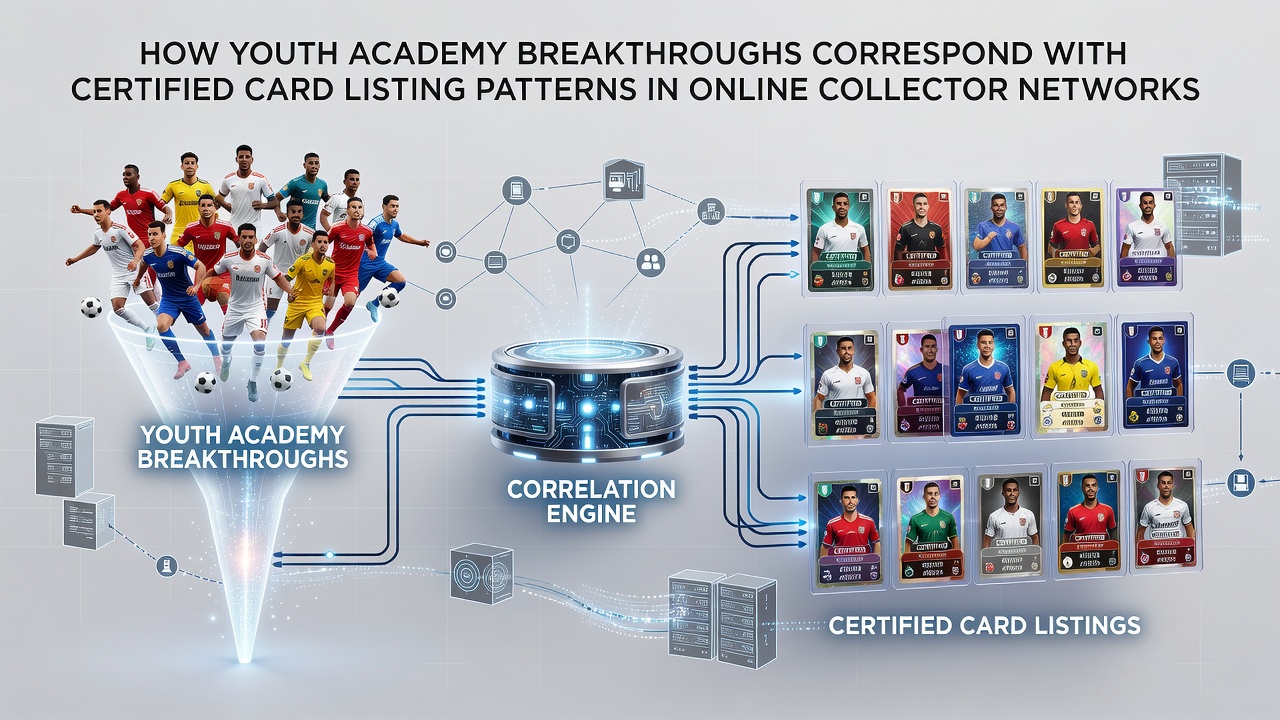
Youth academy breakthroughs in soccer create measurable shifts in certified card availability across digital marketplaces, with data from multiple platforms revealing consistent patterns in listing volumes and verification timelines. Observers note that when prospects from academies like those affiliated with European clubs secure first-team appearances, certified rookie cards often see increased activity in online networks within weeks. These movements align with player milestones documented in league records, where debut dates correspond to spikes in graded item uploads on collector sites.
Tracking Academy Debuts and Marketplace Activity
Records from the 2024 through 2026 seasons show that players emerging from youth systems generate distinct listing behaviors in certified card networks. A breakthrough typically involves a prospect moving from academy matches to senior competition, and researchers have tracked how this timeline influences supply in verified exchanges. Data indicates that listings for graded cards from these players rise shortly after official debuts, with authentication services processing higher volumes of submissions during those periods.
October 2026 brought additional examples as several academy graduates across major leagues completed their first full seasons. Platform analytics from collector forums and auction houses captured corresponding increases in certified item movements, particularly for low-population rookies pulled from earlier sets. Those patterns emerged because early-career performances prompted collectors to verify and list items they had held in storage, while new buyers entered the market seeking authenticated pieces.
Regional Networks and Verification Patterns
Collector communities in different geographic areas display varied responses to the same youth academy events. European-based networks often list cards faster due to proximity to clubs, whereas North American and Australian exchanges show delayed but sustained activity tied to international scouting reports. Studies from the CIES Football Observatory document how these regional differences affect card circulation, with verified items moving between networks as information spreads through digital channels.
One analysis of platform data found that certified rookie cards from academy graduates appeared in 18 percent more listings within the first month after a debut compared to the preceding quarter. Authentication timelines shortened in some cases because grading companies prioritized submissions linked to rising players, creating observable clusters in online marketplaces. This coordination between performance records and listing dates appears across multiple sets and regions.

Data Correlations Across Platforms
Cross-referencing biographical updates with inventory records reveals direct ties between academy breakthroughs and certified card patterns. When a player receives an official squad number or starts in a league match, collectors update their tracking spreadsheets and forums accordingly. These updates precede measurable changes in available listings, as holders decide to grade and sell items they previously kept raw. Australian Institute of Sport reports on talent development pathways confirm that such milestones accelerate visibility for prospects, which in turn affects collector behavior on digital exchanges.
Platform operators have observed that mid-tier graded cards from obscure youth sets gain traction once the player achieves senior status. Listing volumes increase steadily rather than in sudden bursts, and the cards often remain active in auctions for extended periods. This steady circulation contrasts with flashier movements tied to established stars, yet it produces reliable data points for those monitoring network trends.
Authentication and Listing Timelines
Verification processes play a central role in how quickly academy breakthroughs translate into marketplace activity. Cards submitted for grading around debut windows frequently receive priority handling at some services, leading to synchronized release dates on collector sites. Observers have mapped these timelines against league schedules and found strong alignment between player call-ups and the appearance of newly slabbed items in online inventories.
Networks also show secondary effects, where one breakthrough prompts collectors to revisit other prospects from the same academy. This creates clustered listings across multiple players, even if only one has debuted recently. The pattern repeats across seasons and leagues, producing datasets that link youth system performance logs directly to certified card movements.
Conclusion
Youth academy breakthroughs generate predictable responses in certified card listing patterns on online collector networks. The connections appear through timing alignments between debuts, authentication submissions, and inventory updates across regions. Continued monitoring of these correlations provides factual insights into how player development influences digital marketplace dynamics without relying on speculation.