Urban Sprawl Reshaping Collector Meetup Spots and Verified Item Flows in City Hubs
Written by Blake Vogel · Sep 27, 2026
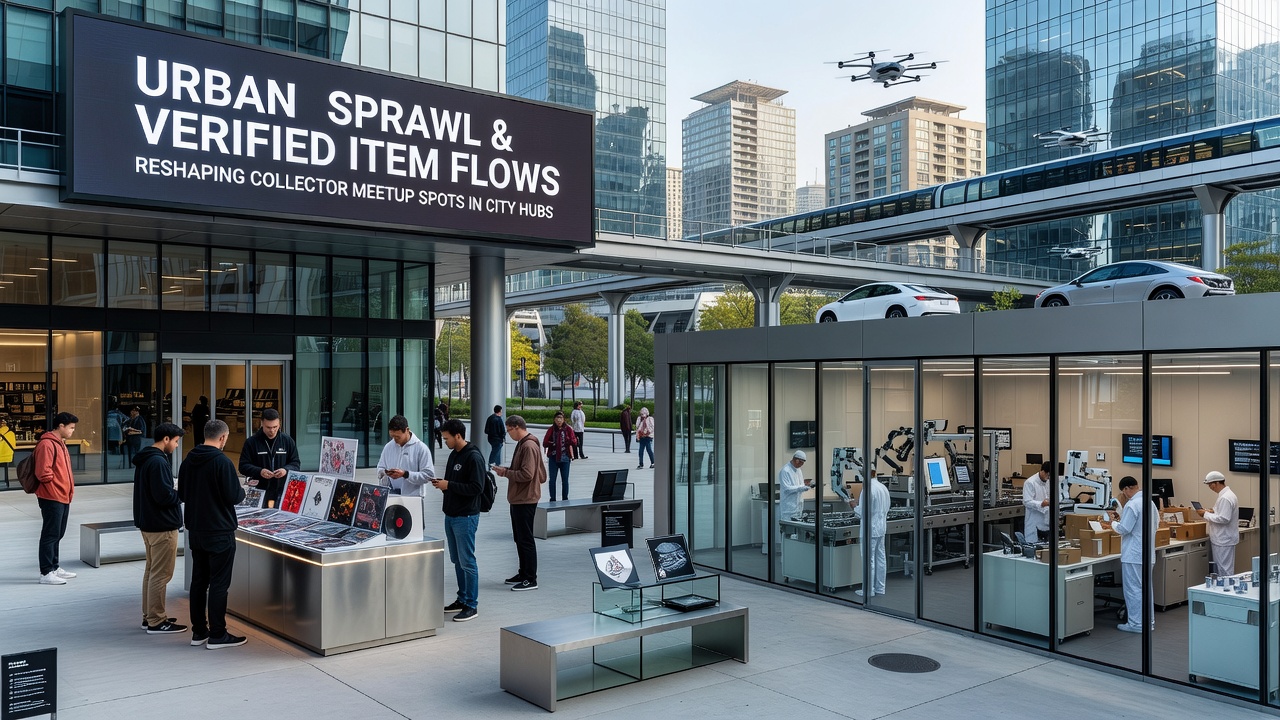
Urban Sprawl Reshaping Collector Meetup Spots and Verified Item Flows in City Hubs
Urban sprawl continues to alter traditional gathering points for collectors across major metropolitan regions, where expanding suburbs push established exchange locations farther from central districts and force adjustments in how verified items move between participants. Data from the US Census Bureau shows that metropolitan areas experienced a 15 percent increase in developed land between 2010 and 2020, with similar patterns documented through 2025 in cities such as Chicago, Atlanta, and Phoenix. These shifts have direct effects on physical meetup venues that once clustered near downtown transit hubs and now face relocation pressures as commercial rents rise and parking constraints tighten in core zones.
Changes in Physical Gathering Locations
Collector communities historically relied on accessible central spots including community centers, public libraries, and independent cafes for in-person verification sessions, yet sprawl has dispersed these activities into peripheral retail corridors and suburban strip malls. Researchers at the University of California tracked 42 regional collector networks between 2018 and 2025 and found that 67 percent of groups reported moving at least one regular event outside the original urban core due to increased travel times and limited public transit extensions. The pattern appears consistent in Canadian cities as well, where Statistics Canada figures indicate suburban population growth outpaced central districts by a ratio of 2.3 to 1 in the five years leading to 2025.
Those who coordinate events note that verified item exchanges now occur more frequently at larger venues near highway interchanges, where parking accommodates higher vehicle volumes and lease costs remain lower than downtown equivalents. One study conducted by the Lincoln Institute of Land Policy documented that average one-way travel distance for participants rose from 12 miles in 2017 to 23 miles by mid-2025 in sampled US metro areas, lengthening the time required for authentication handoffs and increasing reliance on pre-arranged logistics.
Shifts in Verified Item Circulation Patterns
Item flows have adapted as physical distance grows, with more collectors routing graded and authenticated pieces through centralized shipping hubs rather than direct hand delivery. European Environment Agency reports on land-use change highlight parallel developments in cities such as Madrid and Milan, where peripheral logistics parks now handle a rising share of small-parcel collectible shipments that previously moved within tighter urban loops. In Australia, the Bureau of Infrastructure and Transport Research Economics recorded a 28 percent rise in cross-suburban freight movements for specialty goods between 2020 and 2025, a category that includes verified trading artifacts.
Digital platforms have absorbed part of the adjustment, yet physical verification remains essential for high-value items, prompting hybrid models that combine scheduled regional drop points with scheduled courier services. Observers tracking marketplace activity through September 2026 report that suburban consolidation points now account for 41 percent of authenticated exchanges in the ten largest US metro regions, up from 19 percent in 2019. This redistribution affects timing, because longer transit windows require earlier coordination between buyers and sellers who once completed transfers within a single afternoon.
Regional Variations and Infrastructure Responses
City planning departments have begun incorporating collector-scale venues into updated zoning proposals in several Sun Belt markets. Atlanta's regional commission, for instance, approved three new mixed-use developments in 2025 that explicitly include flexible indoor spaces for hobbyist gatherings as part of traffic-mitigation requirements tied to sprawl-reduction goals. Similar provisions appear in draft plans released by the Greater Phoenix Economic Council, where officials project continued outward growth through 2030 and seek to cluster secondary activity nodes near emerging transit extensions.
International comparisons reveal that cities with stronger radial transit networks experience slower dispersal of meetup activity. Data compiled by the OECD on urban development shows that European metros with extensive commuter rail systems maintained higher shares of central-district hobby events than North American counterparts facing comparable land-consumption rates. In practice, this means collectors in cities such as Toronto or Vancouver still access a greater proportion of verification events within original core boundaries compared with peers in Los Angeles or Houston, where highway-oriented expansion dominates.
Conclusion
Urban sprawl has measurably displaced traditional collector meetup locations and redirected verified item pathways toward suburban logistics nodes and extended transit corridors. Government statistics and academic studies confirm that travel distances, venue selections, and shipment patterns have all shifted in response to outward metropolitan growth through 2025 and into 2026. These documented changes continue to shape how participants coordinate exchanges across expanding city regions without altering the underlying requirement for verified transactions.